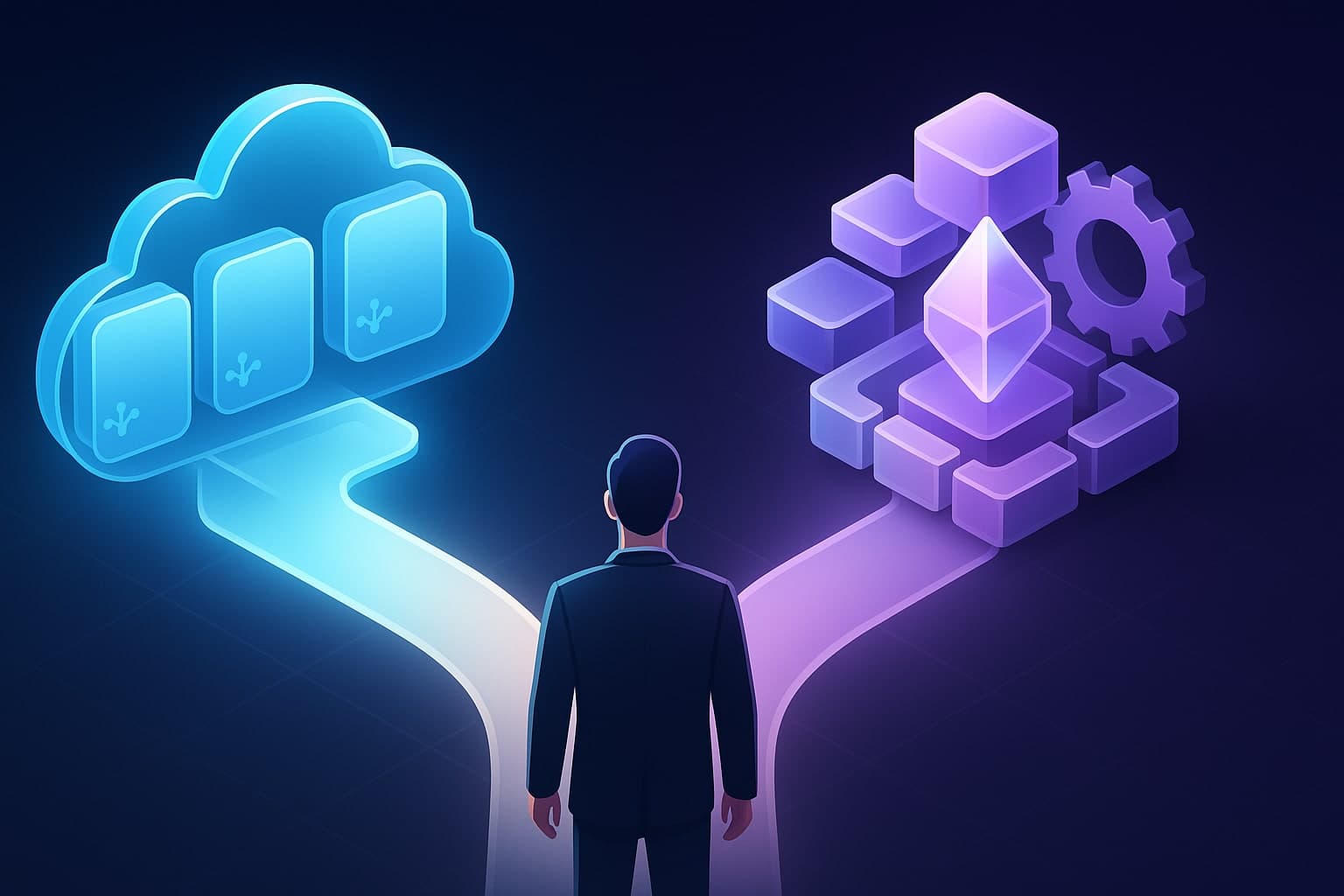
Salesforce's marketing product portfolio has grown significantly over the past couple of years. With the launch of Marketing Cloud Next (MCN) at Connections 2025 and the continued evolution of Marketing Cloud Engagement (MCE) — the platform that traces its roots back to ExactTarget — organizations now have two powerful but fundamentally different options for marketing automation on Salesforce.
The question isn't which platform is "better." It's which platform is the right fit for your organization's size, technical maturity, use cases, and long-term strategy. This article breaks down the key differences to help you make that decision with confidence.
Understanding the Two Platforms
Before diving into the comparison, it helps to understand what each platform is and where it comes from.
Marketing Cloud Engagement (MCE) is Salesforce's established, enterprise-grade marketing automation platform. Originally built as ExactTarget and acquired by Salesforce in 2013, MCE has over two decades of maturity.
It operates on its own dedicated infrastructure and connects to Salesforce CRM through Marketing Cloud Connect. MCE is known for its depth, flexibility, and robust multi-channel capabilities across email, SMS, push notifications, advertising, and more.
Marketing Cloud Next (MCN) is Salesforce's next-generation marketing platform, built natively on the Salesforce core platform with Data Cloud as its foundational data layer. Announced at Connections 2025, MCN represents a ground-up rethinking of marketing automation — one that's AI-native, deeply integrated with the broader Salesforce ecosystem, and designed to unify B2B and B2C marketing into a single experience.
MCN is available in Growth and Advanced editions, catering to different levels of organizational complexity.
Both platforms are actively sold, supported, and receiving continued investment from Salesforce. The choice between them depends on what your organization needs today and where you're headed.
The Fundamental Architectural Difference
The single most important distinction between MCE and MCN is where they live.
MCE runs on its own standalone infrastructure. It has its own data model, its own user interface, and its own security framework. It connects to Salesforce CRM through a connector (Marketing Cloud Connect), which synchronizes data between the two systems.
This architecture has served large enterprises well for years — it gives MCE independence, resilience, and the ability to operate even without a Salesforce CRM license.
MCN is built natively on the Salesforce Platform. It shares the same metadata framework, security model, and real-time data layer (Data Cloud) as Sales Cloud, Service Cloud, and Commerce Cloud. There's no connector bridging two separate systems — marketing data and CRM data exist in the same environment.
This architectural difference shapes nearly everything else in the comparison: how data flows, how journeys are orchestrated, how AI is leveraged, and how the platform integrates with the rest of your tech stack.
Where Marketing Cloud Engagement Excels
MCE's maturity and depth make it a strong choice for specific organizational profiles and use cases.
Enterprise-Scale Sending and Deliverability
MCE's sending infrastructure is battle-tested at massive scale. Dedicated IP management, advanced deliverability tooling, sender authentication, and high-volume throughput have been refined over more than two decades.
For organizations sending tens of millions of emails per month, MCE's sending capabilities are deeply proven. MCN has recently introduced dedicated IP support, but organizations with strict deliverability SLAs may prefer MCE's more established infrastructure.
Deep Channel-Specific Tooling
MCE offers a rich ecosystem of specialized modules — Email Studio, MobilePush, Journey Builder, Automation Studio, Advertising Studio, and more. Each of these "builders" and "studios" provides granular control over its respective channel.
For teams that need fine-grained control over complex, channel-specific workflows — particularly those leveraging AMPscript, SSJS, and SQL queries within Automation Studio — MCE offers a level of customization depth that MCN is still building toward.
Standalone Flexibility
MCE can operate independently of Salesforce CRM. This makes it a viable option for organizations that haven't adopted Salesforce as their core CRM, or those that prefer to keep their marketing automation decoupled from their CRM environment.
MCN, by contrast, requires an Enterprise (or higher) Salesforce CRM license.
Proven Track Record with Complex B2C Programs
Large retail, media, hospitality, and e-commerce brands have built highly sophisticated marketing programs on MCE over many years. The platform's flexibility means it can be tailored to fit virtually any business requirement, no matter how complex.
This customizability — while it does come with a steeper learning curve — is a genuine strength for organizations with specialized needs.
Where Marketing Cloud Next Excels
MCN brings a different set of strengths, rooted in its modern architecture and AI-first design.
Native Data Cloud Integration
Because MCN is built on Data Cloud, customer data from across Salesforce and external sources is unified at the platform level through advanced identity resolution. This creates a true "Unified Individual" profile without the need for middleware, custom integrations, or batch synchronization.
Segments can be activated in near real time, and marketers can work with a single, consistent view of the customer that's shared across the entire Salesforce ecosystem.
Agentic AI with Agentforce
MCN is designed around Salesforce's Agentforce AI agent framework. These aren't bolt-on AI features — they're embedded into the platform's core workflows.
With Agentforce Campaign Creation, marketers can describe a campaign goal in natural language and have the AI generate the brief, build the audience, draft content, and configure the journey. Agentforce Web Curation adapts website content in real time based on visitor behavior. Agentforce Lead Management automates the qualification and handoff process between marketing and sales.
MCE has access to Einstein AI features, and MCE+ (the enhanced licensing tier) brings some Agentforce capabilities. But the depth of AI integration in MCN is fundamentally deeper, since the platform was architected with agentic workflows in mind from the start.
Unified B2B and B2C in a Single Platform
Historically, Salesforce customers needed MCE for B2C and Pardot (now Marketing Cloud Account Engagement) for B2B — two separate platforms with separate data models and workflows. MCN eliminates this divide.
A single platform handles lead nurturing, account-based marketing, consumer campaigns, and lifecycle journeys, all drawing from the same unified customer data. For organizations that operate across both B2B and B2C models, this consolidation is a significant operational simplification.
Cross-Cloud Orchestration
MCN's native position on the Salesforce Platform means marketing workflows can seamlessly interact with Sales, Service, and Commerce Cloud processes.
A commerce event can trigger a marketing journey. A service case can influence messaging cadence. A sales signal can adjust campaign targeting — all without integration middleware. MCE can achieve similar outcomes, but typically through connector-based integrations that add complexity and latency.
Unstructured Data Activation
MCN can activate unstructured data — documents, images, content from Google Drive, SharePoint, Zendesk, blogs — directly within campaign workflows. This opens up personalization possibilities that would require significant custom development in MCE.
Lower Total Cost of Ownership for New Implementations
For organizations starting fresh, MCN's native integration with the Salesforce Platform means fewer connectors to maintain, fewer sync issues to troubleshoot, and less custom development to bridge systems.
The reduced integration overhead can translate to a meaningfully lower total cost of ownership compared to a new MCE implementation that requires Marketing Cloud Connect configuration, data synchronization design, and ongoing connector maintenance.
Choosing the Right Platform
Rather than a one-size-fits-all recommendation, here's a practical framework for evaluating which platform aligns with your organization.
MCE is likely the stronger choice if:
- You're a large B2C enterprise with high-volume sending requirements and strict deliverability needs
- Your team has deep expertise in MCE's tooling (AMPscript, SSJS, SQL, Journey Builder) and relies on that level of granular control
- You don't use Salesforce CRM, or you need your marketing platform to operate independently
- You have a mature, heavily customized MCE environment that's delivering strong results and doesn't need to be disrupted
- Your use cases are primarily single-channel or channel-specific, such as highly sophisticated email programs
MCN is likely the stronger choice if:
- You're already on the Salesforce Platform and want deep, native integration between marketing and CRM
- You need to unify B2B and B2C marketing on a single platform
- AI-driven automation and agentic workflows are central to your marketing strategy
- You're a new Salesforce marketing customer starting from scratch — building on MCN avoids the integration overhead of MCE's standalone architecture
- Cross-cloud orchestration across marketing, sales, service, and commerce is a priority
- You want to leverage Data Cloud's unified customer profiles and real-time segmentation without custom middleware
Consider both (via MCE+) if:
- You're an existing MCE customer who wants to begin adopting MCN capabilities without disrupting proven workflows
- You want to pilot MCN for new use cases while maintaining your established MCE programs
- You're in a transition period and want to evaluate MCN's maturity before committing to a full shift
Salesforce's MCE+ licensing tier is specifically designed for this scenario. It provides access to MCN innovations — including Digital Wallet, Flow-based journey orchestration, and unified campaign dashboards — while keeping your existing MCE journeys, content, and data intact.
Journey Builder journeys can be connected with Salesforce Flow, allowing teams to build new campaigns in MCN while continuing to leverage existing MCE automations.
At a Glance
| Marketing Cloud Engagement | Marketing Cloud Next | |
|---|---|---|
| Architecture | Standalone infrastructure | Native on Salesforce Platform |
| Data Foundation | Own data model + MC Connect | Data Cloud (unified) |
| AI Capabilities | Einstein AI; Agentforce via MCE+ | Agentforce-native, agentic workflows |
| B2B + B2C | B2C focused (B2B via MCAE) | Unified B2B and B2C |
| CRM Dependency | Can operate standalone | Requires Salesforce Enterprise+ |
| Channel Depth | Deep, mature multi-channel tooling | Growing; expanding each release |
| Best For | Large B2C enterprises with complex, high-volume programs | Organizations seeking unified, AI-native marketing on Salesforce |
| Ideal Starting Point | Mature teams with existing MCE expertise | New implementations; platform-centric strategies |
Both platforms are powerful. The right choice depends on where your organization is today, what your marketing team needs, and how you see your Salesforce ecosystem evolving.
At Decision Foundry, we work with organizations across industries to evaluate, implement, and optimize Salesforce marketing solutions — whether that's Marketing Cloud Engagement, Marketing Cloud Next, or a strategic combination of both. Reach out to us to discuss which path makes sense for your business.