Marketing analytics used to mean dashboards. Someone built them, someone checked them, and once a week a team sat around a table debating whose numbers were right.
That model is over.
The future of AI in marketing analytics is not about faster reporting. It revolves around systems that can observe, make decisions, and act in real time. With the AI marketing sector projected to reach nearly $46 billion this year, the conversation has shifted from automation to autonomy.
The question is no longer whether to use AI in marketing analytics. It is whether your infrastructure is ready for what it demands and whether your team is organized around it or just layering tools on top of the old model.
Here is what the transition actually looks like in 2026.
1. From Dashboards to Decision Engines
The dashboard is not dead. But it has been demoted.
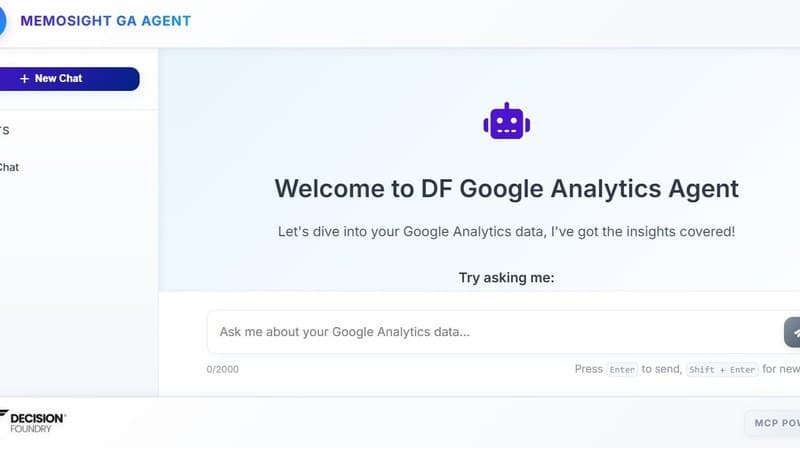
Dashboards are evolving into storytelling and decision engines with conversational interfaces, AI agents, and automated anomaly detection that catches what top-line views miss. The shift is from a report you read once a week to a system that monitors continuously, surfaces anomalies automatically, and tells you what to do about them before your weekly meeting even happens.
Marketing analysts can now ask complex questions like "Why did CAC spike 18% in the Northeast region last week?" and receive root-cause analysis with recommended tests without writing SQL or Python. That is not an incremental improvement to how marketing analytics works. It is a different model entirely.
2. Agentic AI Has Moved from Pilot to Production
Instead of waiting for a marketer to review dashboards, AI agents now monitor performance around the clock. The system enables automatic budget reallocation across different channels while suspending ads that do not deliver satisfactory results.
Agentic workflows represent the next evolution. Rather than simply executing predefined automation sequences, AI agents can now run continuous optimization loops testing creative variants, adjusting bids based on real-time conversion signals, and reallocating budget across channels without human approval for changes under defined thresholds. Early adopters report 15 to 22% improvement in ROAS compared to rule-based automation.
The role of the campaign manager has not disappeared. It has moved upstream. Setting objectives, guardrails, and success metrics is now the job. Execution at scale belongs to the agent.
3. The Data Foundation Problem Is Holding Most Teams Back
Here is the uncomfortable truth behind the adoption numbers. 81% of marketers say they would trust AI to respond to customers at scale but are blocked by disjointed data. The infrastructure problem is preventing the agentic transition even where the intent is clear.
75% of marketers have adopted AI, yet 84% still run generic campaigns and 69% struggle to respond to customers promptly. The adoption of tools is not the same as the integration of intelligence. Organizations that have unified their data, resolved attribution, and governed their metrics are getting meaningfully different results from AI than those who have not.
Marketing readiness for agentic AI is tightly linked to the maturity of data and business intelligence foundations. If your data is not in order, agentic AI will not save you.
This is the bottleneck most marketing leaders are not talking about. It is not the AI, it is the data it runs on.
4. Measurement Has Been Rebuilt from Scratch
Attribution was already broken before AI entered the picture. Marketing Mix Modeling and attribution once felt like rival schools of thought. MMM answered macro questions over long time horizons. Attribution answered micro questions about paths and touchpoints. In 2026, the most mature marketing analytics setups integrate both.
The new measurement model combines MMM for channel-level budget decisions, multi-touch attribution for journey-level analysis, and incrementality testing to answer the question that matters: where does the next pound of budget compound? The organizations that have unified these three are making budget decisions with a level of confidence that was not possible two years ago.
5. Search Has Changed and Analytics Has Not Caught Up
By 2026, artificial intelligence orchestrates entire campaigns. From audience discovery through optimization while search engines prioritize AI-generated answers over traditional organic listings.
AI-sourced traffic increased 527% from January to May 2025. ChatGPT now processes 72 billion messages monthly. The shift goes from "ranking first" to a new goal: "being the answer."
One trend that quietly reshapes every other analytics conversation in 2026 is the rise of the agentic web. By 2024, bots reached 51% compared to 49% human traffic. Traditional tools like GA4 have a blind spot. AI agents browse in headless mode, so for your analytics, that visitor never existed.
Most marketing analytics stacks are measuring a shrinking slice of the actual customer journey. The teams that are ahead are already building measurement infrastructure for AI-mediated traffic not waiting for their analytics vendor to catch up.
6. The Analyst Role Has Fundamentally Changed
The role of the marketer will continue to evolve, shifting from a hands-on executor to a strategic orchestrator. The most valuable marketing skills will no longer be about technical proficiency in a specific tool but about the ability to think critically, ask the right questions, and effectively manage a team of AI agents.
This is not a soft observation. It is a structural reality showing up in how marketing organizations are being rebuilt. Teams that picked one channel and mastered the agentic version of it are outperforming teams running shallow agentic workflows across all channels at once. The 2026 winners are not the teams with the most AI tools. They are the teams whose AI tools talk to each other and whose work compounds in one channel before sprawling.
The analyst of 2026 is not the one who pulls reports. It is the one who owns the data model, defines what the metrics actually mean, and decides where AI can act without asking permission.
7. Governance Is the Bottleneck Nobody Budgeted For
Organizations overspend on content generation - 22% of budget, 81% adoption, while underinvesting in governance, 3% of budget, and 31% adoption. This imbalance creates technical debt: AI-generated content floods channels without oversight frameworks to catch bias, ensure compliance, or audit attribution claims.
40% or more of agentic AI projects will be canceled by the end of 2027. Primary drivers: unclear ROI, escalating costs, inadequate governance.
The teams that survive the agentic transition will be the ones that built governance into the stack from the start not the ones that moved fastest and fixed the problems later.
What This Means If You Are Leading a Marketing Analytics Function
The transition in 2026 is not a tooling upgrade. It is an organizational redesign. The teams that are ahead have made three specific decisions.
They unified their data before activating AI on top of it. They picked one workflow to make truly agentic and proved the value before expanding. And they invested in governance infrastructure, metric definitions, guardrails,audit trails before the AI layer needed it.
The teams that are behind are running AI tools on fragmented data, measuring the wrong things, and hoping the technology improves faster than their competitive gap widens.
Technology is not the constraint. The foundation underneath it is.
If you are building or rebuilding your marketing analytics infrastructure for the agentic era, talk to the Decision Foundry team.